The partnership helps us look beyond the numbers and better understand what is going on within the sport
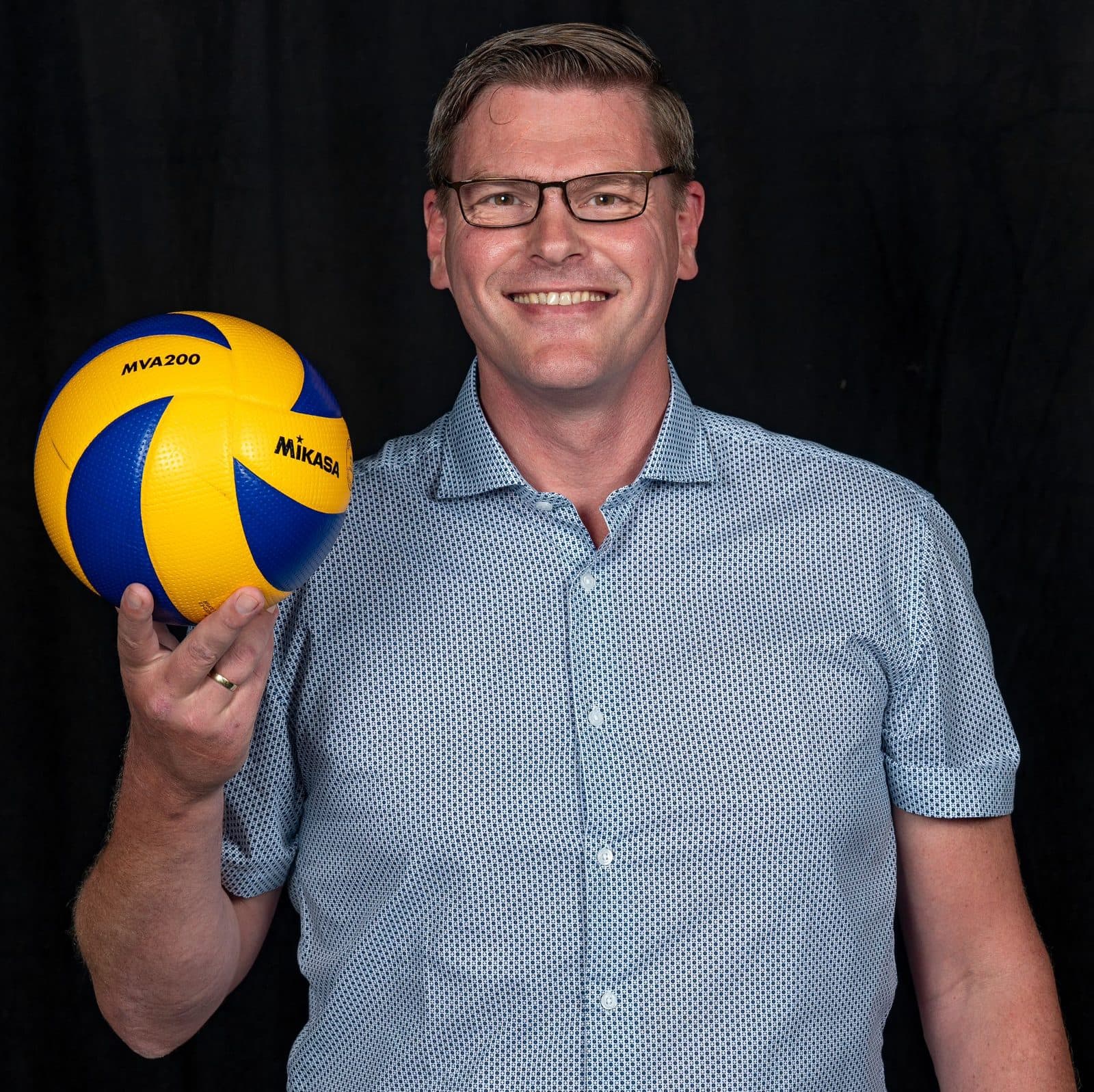
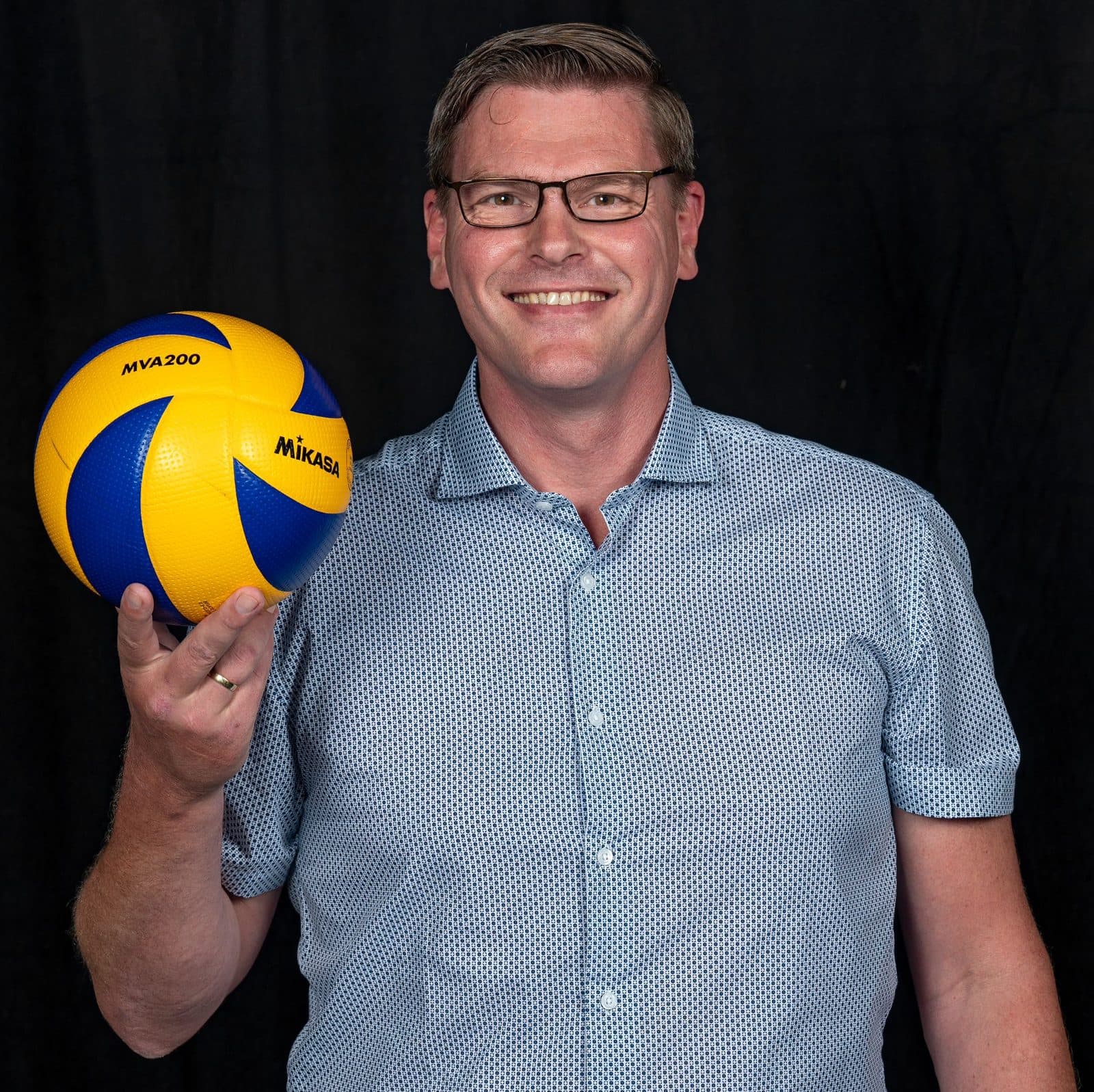
Interview with Peter van Tarel, Manager of Sport Development at the Nevobo
By Inge Geloudemans, Stichting SAM × BURO SPECO
The Nevobo, the Dutch volleyball federation, recently joined Stichting SAM. Together we are working towards more equality in sport. But where do the opportunities and challenges still lie within volleyball? I discussed this with Peter van Tarel, Manager of Sport Development at the Nevobo. We talked about the balance between men and women, the role of the federation and the steps needed to create more balance.
Introduction: who are you and what do you do at the Nevobo?
"I'm Peter. I'm Manager of Sport Development at the volleyball federation. I live in Assen and I come from volleyball myself. I have always played volleyball and have now worked at the federation for 27 years, in a number of different roles.
In my current role I'm responsible for the Sport Development department. It focuses on supporting and developing clubs, but also on developing new activities and social programmes. Those social programmes are aimed at, among others, girls and young people in general, both in the Netherlands and abroad.
I'm also active for the international volleyball federation, and we have several projects running in the Caribbean, Europe and other countries. The training courses for trainers, coaches and referees also fall under the Sport Development department."
Why did you join Stichting SAM?
"Generally speaking, we are a women's sport. If you look at the youth, around 80% of the players are girls and 20% boys. If you look at the entire membership, it's closer to 60-40.
At the same time, we see that in certain decision-making positions more men than women are active, for example on boards and in positions such as chair and treasurer. We also see that difference among coaches and referees, especially as the level goes up. Many women are active at youth level, but the higher the level, the more we mainly see men.
That was a reason for us to look at how we can bring more balance within the clubs in the distribution of men and women across different roles and positions.
So we wanted to take a broader look at how things actually stand in our sport, and not only at the data. We also wanted to know where we can exert influence.
We had been working on this for a while. Our programmes abroad had also made us think about how things stand in the Netherlands. We just weren't ready yet to really take a step. So getting to know Stichting SAM came at a good moment. We need more women in decision-making positions, because that ultimately makes our sport stronger."
How do you view equality within volleyball?
"If you look at the core of our sport, it is very equal. The rules are the same for everyone, apart from the net height. The prize money is the same and the attention is the same.
If you look worldwide, the attention for women's volleyball may even be greater than for men's volleyball. In indoor volleyball, the women's team is ranked higher in the world, is more popular and has more partners. In beach volleyball, it doesn't really make much difference in terms of partners.
So our sport is actually quite equal. It's only in a number of positions within our sport that we still have steps to take."
What do you want to achieve with the partnership with SAM?
"For us it comes down to three steps.
The first step is insight: understanding how things really stand.
The second step is looking at what we have influence over. We won't be able to change the world, but within our sport we may well have influence over a number of things. We would like to know that.
And the third step is looking at how we are going to use that influence, and whether we are ready for it.
So first become aware, then look at where you have influence to change things, and then get to work."
Mulier is currently researching the Nevobo's data. Peter expects to discuss the first results and possible conclusions with Stichting SAM soon.
When is the partnership a success for you?
"I think those first two steps in any case. That we understand what is happening and how things stand, and that we also understand where we have influence.
Beyond that, I would like it if we could perhaps achieve one concrete result very quickly. I suspect, but that is an assumption, that it is also about behavioural change and cultural change. And of course that's not something you do in the short term.
So looking at the period of the partnership, I would like it if we could already formulate one concrete thing to get to work on."
What would you personally like to achieve?
"Personally, I would love to see women find their way to top positions and decision-making positions a little more easily.
I think we are already doing quite well in terms of equality, but perhaps not yet in terms of equity. If we can make it easier for women to move towards top positions and decision-making positions, that would make me very happy.
That means, for example, that one day we have a female national team coach, or that we see more women coaching in the Eredivisie. That would already be a great expression of it. It also paves the way for the young people coming up behind them.
We have a few role models, but not many. So it doesn't happen by itself. We are looking at whether we can do something about that, for example with scholarships. In addition, since this season the international volleyball federation requires a woman in the technical staff of the national team.
That immediately raises the question of how you find someone who is trained at that level. So perhaps we need to create a training programme for that. In that way, it does set something in motion. I hope we can take steps there."
Learning from other sports
Peter also sees value in learning from other sports that work with Stichting SAM.
"I'm glad there is collaboration. I hope we can also learn something from other sports that Stichting SAM works with. I think this doesn't only apply to us.
The culture within a sport may be different and so, of course, is the situation, but if you look at it very broadly, I think there is little difference."
Which sports could serve as an example is hard for Peter to say. He does mention that he is watching developments in korfball and hockey, for example. He also wants to keep an eye on the outcomes of Stichting SAM's partnerships with other sports.
In closing
For the Nevobo, the partnership starts with gaining insight: understanding how the balance within the sport stands and where the federation can exert influence. From those insights, the Nevobo then wants to look at what steps are possible.
For Peter there is a clear wish: that women find their way to top positions and decision-making roles within volleyball more easily. More female coaches and, ultimately, a female national team coach would, in his view, be great expressions of that.
On behalf of Stichting SAM, we thank Peter for the open conversation and his contribution to the partnership. We look forward to the insights from the research and the follow-up steps that may come from it.
This article was automatically translated from Dutch. Read the original Dutch version.